Transitioning to Elementary School
Class Structure
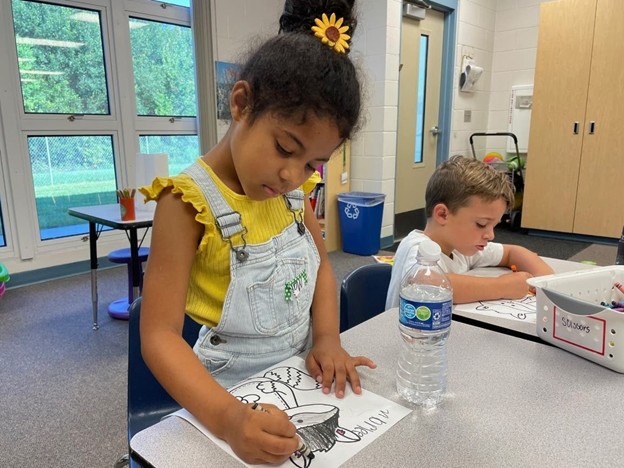
In elementary school, students are typically taught by one or two dedicated teachers at each grade level. This structure helps create a consistent, supportive learning environment while allowing students to build strong relationships with their instructors.
Navigating the Campus
Students will learn to move around the school safely and efficiently. They will travel in organized lines with their teacher when transitioning between classrooms or other areas of the building.
Specials
Each week, students participate in a variety of “special” classes such as Art, Music, and Physical Education. Families will receive a schedule at the start of the school year. It is important that students dress appropriately for the activities planned each day—especially for PE and other movement-based classes.
Cafeteria
Students will eat lunch at assigned tables with their classmates. Staff will guide students as they learn routines for purchasing school lunch or bringing food from home, ensuring they feel comfortable and confident during mealtime.
Restrooms
Restrooms are located within or near each classroom pod. Teachers and staff will help students learn proper restroom procedures and expectations to support their independence throughout the school day.
Transportation
Ensuring student safety during transportation to and from school is essential, as it protects students’ well‑being and provides families with confidence that their children arrive and depart safely each day.
- Families using car transportation will receive a car tag for dismissal. For safety, only individuals authorized by the family may pick up students.
- Students who walk or ride bikes to school will have a designated procedure for arrival and dismissal. A secure location will be provided for bicycle storage.
- Bus riders will be dropped off and picked up at an assigned location each day.
- School personnel will be present across all transportation areas to ensure student safety at arrival and dismissal times.
Grading Platform
Open communication between families and teachers is essential to support student growth. At the beginning of each grading period, students and parents will be informed of the grading criteria used in the school and in each course. Progress is reported electronically, and parents/guardians can access updated academic information through the school’s student information system.